跳至内容
跳至内容 

Many parents have asked this simple question:
“Are baby hangers and kid hangers really different? Can’t I just use one type for everything?”
Actually — they are quite different.
While they might look similar, the size, strength, and design vary a lot depending on the age group. Choosing the right hanger not only keeps your child’s clothes neat but also helps maintain their shape and saves closet space.
1. The Main Difference: Size and Stage
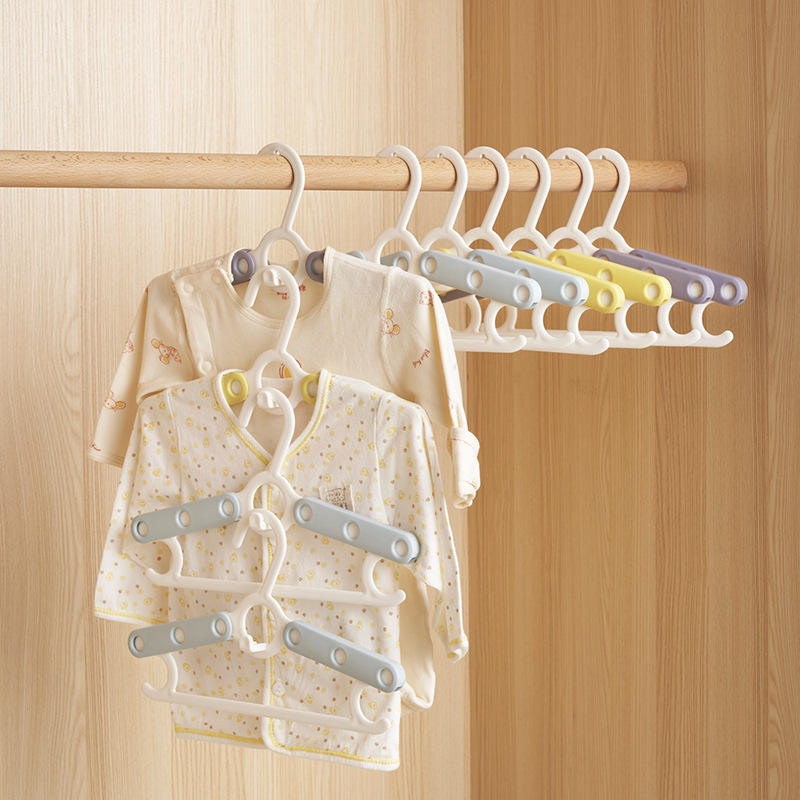
Baby hangers are typically about 10 inches (25 cm) wide and are designed for clothing in the 0–3 years range.
They’re small, lightweight, and slightly curved to fit tiny shoulders — ideal for onesies, baby sweaters, and small jackets.
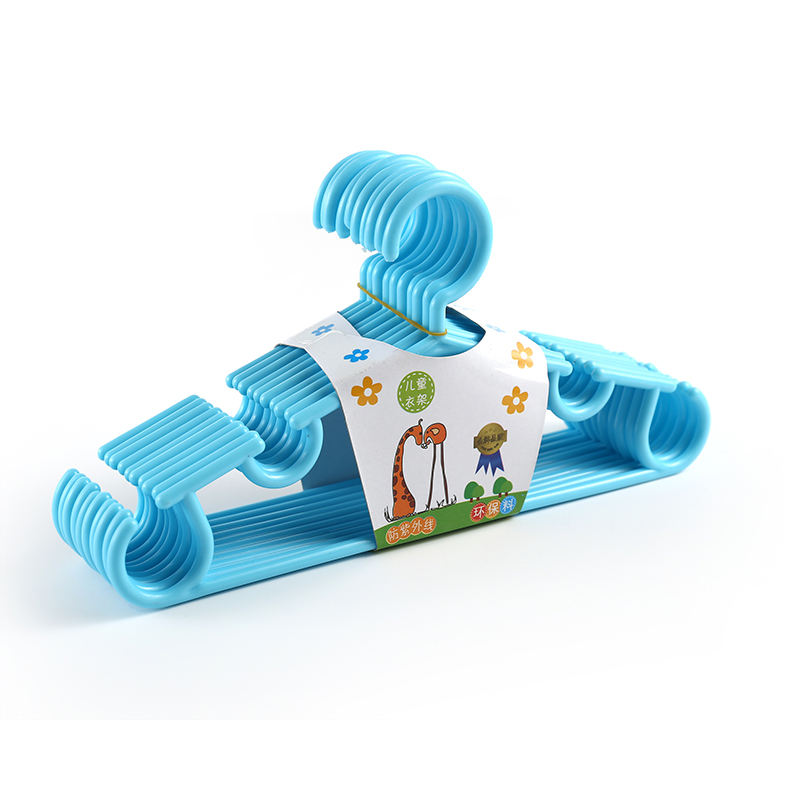
Kid hangers, on the other hand, are around 12 inches (30 cm) wide.
They’re made for children aged 4 to 12 years, whose clothes are larger, thicker, and heavier. The wider frame and stronger structure can easily hold items like hoodies, dresses, or coats.
In short:
Baby hangers = “small size” for baby clothes.
Kid hangers = “medium size” for growing children.
As your child grows, your hangers should grow too.
2. Why You Shouldn’t Mix Them Up
It might be tempting to think hangers are interchangeable, but using the wrong size can actually cause problems — both for your clothes and your storage space.
Better Fit, Better Shape
Putting a baby’s shirt or jacket on an adult or kid-sized hanger can stretch out the shoulders or make the fabric lose shape. A baby hanger, however, supports the garment perfectly without deforming it.Save Closet Space
Baby hangers take up less horizontal space, which means you can hang more clothes in a single row. This is especially useful for small wardrobes or nursery closets.Right Weight Support
Baby hangers are lighter and built for delicate fabrics. Kid hangers are thicker and sturdier — capable of holding heavier clothing without bending or breaking.Safety and Design
Baby hangers usually have smooth, rounded edges to protect delicate fabrics.
Kid hangers often include extra features like notches, clips, or non-slip coatings for hanging skirts, dresses, or thicker jackets.
3. Quick Comparison Chart
| Feature | Baby Hangers | Kid Hangers |
|---|---|---|
| Suitable Age | 0–3 years | 4–12 years |
| Width | ~10 in / 25 cm | ~12 in / 30 cm |
| Material | Lightweight plastic or soft wood | Thicker plastic, wood, or metal |
| Strength | Light duty | Strong and durable |
| Design Focus | Compact, non-slip, gentle support | Stable, long-lasting, better grip |
| Color Style | Soft, pastel tones | Bright, playful colors |
4. When to Switch from Baby to Kid Hangers
Most children start transitioning around age 3 or 4, when their clothes become longer and wider.
If you notice baby clothes starting to stretch at the shoulders, or hangers no longer fitting properly, it’s time to move up a size.
Here’s an easy way to check:
Measure your child’s shirt shoulder-to-shoulder width and choose a hanger that’s about 1–2 cm shorter than that measurement.
This ensures the hanger fits perfectly without overstretching the fabric.
5. How to Choose the Right Hanger
Match the Size to Your Closet
Smaller closet? Go with baby hangers for efficiency.
Bigger wardrobe with more bulky items? Kid hangers will keep things organized and sturdy.Pick Safe, Non-Toxic Materials
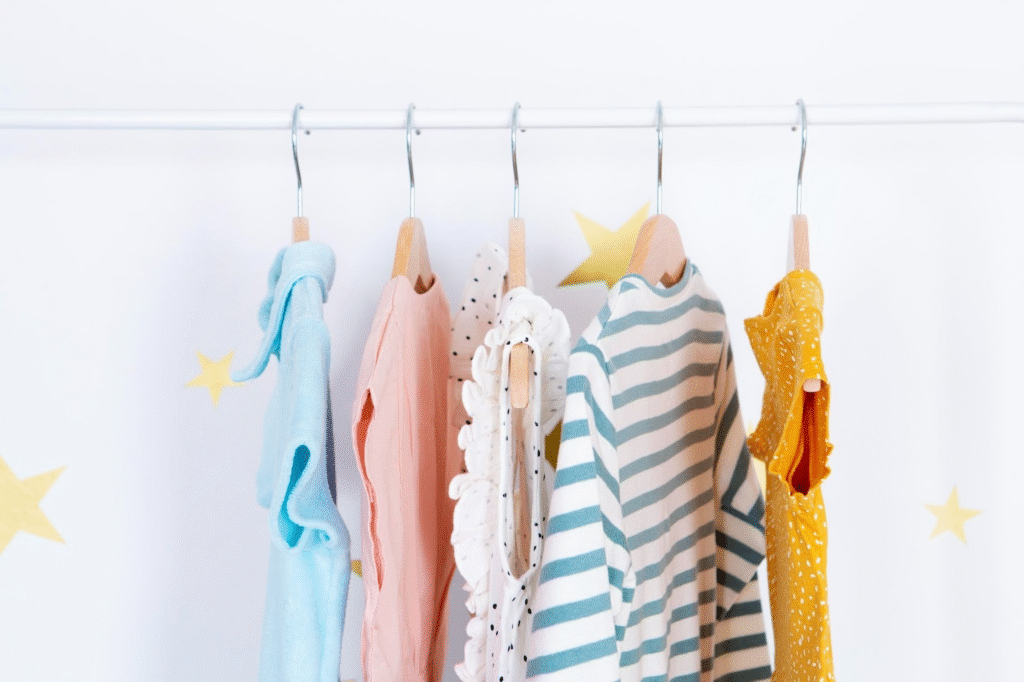
For babies, always choose BPA-free plastic or eco-friendly wooden hangers. Avoid cheap plastic that may have odors or rough edges.Look for Non-Slip Features
Baby clothes are small and light — they slip easily. Choose hangers with notches, velvet surfaces, or rubber grips to keep them in place.Stick to One Color Scheme
Using hangers in a consistent color makes the wardrobe look clean and well-organized.Use Both During the Transition Phase
As your child grows, it’s smart to keep a mix of both baby and kid hangers. Use smaller ones for light baby clothes and larger ones for new outfits. This gradual switch makes organization easier.
6. The Takeaway
Hangers may seem like a small detail, but the right choice can make a big difference.
Baby hangers are about gentle support and space-saving; kid hangers are about strength and longevity.
By choosing the correct hanger size, you keep your child’s clothes neat, extend their lifespan, and make your daily routine smoother.
In one simple sentence:
Small clothes need small hangers, growing kids need bigger hangers.
A well-fitted hanger keeps every outfit looking new — and every closet looking beautiful.